Scalable Digital Businesses for People Who Want to Grow Online Now

Anúncios
Scalable digital businesses for people who want to grow online are models that combine digital products, automation, predictable funnels, and metrics like CAC and LTV to generate recurring revenue and scale without a proportional increase in time or operating costs.
Scalable digital businesses for people who want to grow online may sound like an empty promise, but with the right model you can increase revenue without becoming a slave to day-to-day tasks. Want to see how to validate ideas, build an efficient funnel, and cut costs without the mystery?
Anúncios
Business models that scale without depending on your time
Scalable digital businesses don’t require you to sell your time. They work when the product runs on its own and revenue grows through repeatable processes.
Here are practical models that let you grow online with fewer hours per sale and more automation.
Anúncios
Digital products and info products
Online courses, e-books, and templates offer automatic delivery and high margins. Once the content is created, you can sell to thousands without extra effort.
Subscriptions and SaaS
Subscription models generate recurring, predictable revenue. A small improvement in retention often greatly increases the value of the business.
- Monthly subscriptions with structured onboarding
- SaaS platforms with scalable plans
- Marketplaces that connect supply and demand
- Licensing and white label to expand reach
To scale without depending on your time, focus on automation: evergreen funnels, digital delivery, and chatbot-based support. That way, each sale requires less human intervention.
Another approach is to productize services: turn custom work into standardized packages. This allows fixed pricing and replication by a team or through processes.
Test prices, offers, and channels with short experiments. Use simple metrics such as CAC, LTV and churn rate to decide where to invest.
Delegate repetitive tasks and create playbooks. Document sales, support, and onboarding processes to speed up hiring and training.
Invest in marketing that scales: evergreen content, optimized paid ads, and affiliate partnerships. These channels expand reach without a proportional increase in your time.
By combining a digital product, automation, and clear metrics, your project becomes a true scalable digital business, able to grow even without adding working hours.
How to validate your offer and find your ideal customer fast
Scalable digital businesses require offers that prove themselves quickly in the market. Validating before scaling avoids wasting time and money.
Let’s look at practical steps to test your offer and find your ideal customer quickly and directly.
Create a minimum first version
Build a simple landing page or sales page with a clear proposition. Use images, the main benefit, and a direct call to action.
Offer a pre-sale, a waitlist, or a mini-course to measure real interest.
Quick, cheap experiments
- Test ads on a low budget to see who clicks.
- Use short forms to capture leads and understand profiles.
- Do quick video interviews with 5–10 potential customers.
- Launch a limited-time offer to measure purchase intent.
While testing, track simple metrics: conversion rate, number of sign-ups, and cost per lead. These numbers show whether the offer has traction.
Another tactic is to segment your audience by problem, not by age. Describe the pain point you solve and look for people who mention that problem in groups and on social media.
Use conversations to refine your proposition
Talk to people who showed interest. Ask what caught their attention, what made them hesitate, and what price feels acceptable. Note the words customers use so you can adjust your messaging.
Small changes to the headline or price can greatly increase response. Run simple A/B tests and compare results over one or two weeks.
If the offer converts well on paid channels, repeat the test on organic channels: posts, partners, and evergreen content. The combination shows real scalability.
Document each experiment in a checklist: hypothesis, audience, channel, result. That way you identify the pattern of who buys and replicate it with more confidence.
In short, validate your offer with minimal versions, low-cost experiments, and real conversations. By mapping the market’s response, you find your ideal customer and have a foundation to scale with less risk.
Marketing structures that generate predictable sales

Marketing structures that are efficient turn effort into predictable revenue. With clear stages, you reduce variability and plan growth with confidence.
This section shows how to build funnels, automations, and channels that generate predictable sales for a scalable digital business.
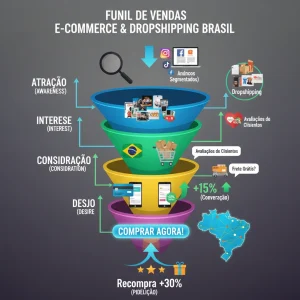
A clear, measurable funnel
Define simple stages: discovery, consideration, conversion, and retention. Each stage needs a metric to track.
Use dedicated pages and offers aligned with the customer’s stage. That way you know where to optimize first.
- Create a lead magnet to capture leads
- Nurture by email with an automated sequence
- Offer a clear value proposition on the sales page
Automation that replicates processes
Automation keeps the experience consistent and reduces manual work. Set up rules for segmentation and sends based on behavior.
Email sequences, post-purchase messages, and automated re-engagement make revenue more predictable.
Invest in tested templates and flows to speed up launches and daily operations.
Complementary, tested channels
Combine paid traffic, organic content, and partnerships. Each channel serves a stage of the funnel and reduces dependence on a single source.
Test with a controlled budget and scale what converts best. Monitor CAC and LTV by channel to prioritize investments.
Evergreen content generates steady traffic; ads drive fast growth; affiliates expand reach without growing your team.
Metrics and continuous optimization
The rule is to follow a few real metrics: conversion rate, cost per lead, and retention. Simple data supports quick decisions.
- Set weekly conversion goals
- Use A/B tests on landing pages and ads
- Calculate LTV to know how much to invest in acquisition
Document hypotheses and results. With a track record, it becomes easier to forecast sales in the coming weeks.
Organize playbooks for each stage of the funnel. That way the team replicates what works and reduces operational errors.
With a well-defined funnel, automation, and simple metrics, you build a structure that sustains predictable sales and lets you scale without relying on overtime.
Lean operations: automation, team, and controlled costs
Scalable digital businesses work best when operations are lean. That means less rework, clear processes, and controlled spending.
Here are practices that combine automation, the right team, and cost management to grow without losing efficiency.
Automation to reduce repetitive work
Automate tasks that don’t need a human decision. This frees up time for strategic activities.
Use simple triggers: sign-ups, payments, and deliveries automatically trigger emails, access, and notifications.
Practical tools and integrations
Choose tools that connect with each other. A good CRM, a course platform, and email automation already solve a lot.
- Automated onboarding flows for new customers
- Integrations between payments and product access
- Support scripts with automatic replies and priorities
Keep message and document templates ready. This speeds up responses and maintains quality.
A lean team with clear roles
Prefer a few professionals with well-defined responsibilities. Clear roles prevent overlap and confusion.
- 1 person for marketing and the funnel
- 1 person for product and content
- 1 person responsible for customer service and operations
Having SOPs (standard operating procedures) makes it easier to outsource and train people quickly. Use deliverable-based contracts when it makes sense.
Controlling costs without stalling growth
Monitor fixed and variable costs separately. Know how much it costs to keep the business running for a month with no sales.
Adopt a flexible budget: prioritize investments that increase predictable revenue.
- Review tool subscriptions quarterly
- Use freelancers for workload peaks
- Automate before hiring whenever possible
Document results and review processes frequently. Small optimizations reduce costs and improve productivity.
Day to day, combine automation, clear roles, and financial control. That way your operation stays lean and ready to scale safely.
Metrics that show whether your business is truly scalable
Scalable digital businesses only show their strength when the metrics prove that growth is sustainable. Measuring what matters helps you decide where to invest and what to optimize.
Here are the indicators that show, in practical terms, whether your project has the potential to scale without breaking.
Acquisition and cost metrics
Monitor how much it costs to bring in each customer. This defines how much you can spend to grow.
- CAC (customer acquisition cost): total marketing spend divided by new customers.
- Conversion rate: the percentage of visitors who become leads and leads who become customers.
- Cost per lead: helps you choose the most efficient channels.
Customer value and profitability
How much each customer brings in over time is crucial. If the value is greater than the cost, there is room to scale.
LTV (lifetime value) measures the expected revenue per customer. Compare LTV with CAC to see your return on investment.
Gross margin shows whether the model is viable as it grows: digital products usually have higher margins.
Retention and business health metrics
Retention shows whether the product solves the customer’s problem. High turnover prevents sustainable scaling.
- Churn: the percentage of customers who leave in a given period.
- MRR/ARR: monthly/annual recurring revenue to forecast cash flow.
- Payback: the time it takes to recover the CAC.
Analyze cohorts to see whether retention improves with changes to onboarding or the product.
Engagement is also a signal: active customers buy more and refer the business to others.
Simple operational metrics
Lean operations require cost control and efficiency. Practical metrics help you make quick decisions.
- Burn rate: how much you burn per month without extra revenue.
- Average support time: a direct impact on satisfaction and retention.
- Activation rate: how many users reach the promised value in the first few days.
Use dashboards with a few key metrics. Avoid an excess of numbers that get in the way of action.
To turn data into scale, set clear goals, track them weekly, and test hypotheses with small experiments. Well-chosen metrics show when to accelerate or change course.
By combining quick validation, digital models, predictable funnels, automation, and clear metrics, you create a safe path to grow without adding working hours. Start with small tests, track CAC, LTV and churn, and adjust processes before scaling.
FAQ – Scalable Digital Businesses for People Who Want to Grow Online
How do I validate an offer without spending much?
Start with an MVP: a landing page, pre-sale, or mini-course. Test with a low ad budget, do quick interviews, and measure conversions to adjust before scaling.
How do I find my ideal customer quickly?
Focus on the pain point you solve, research groups and social media, target ads by problem, and talk to leads to identify patterns and words that convert.
Which metrics are essential to know whether I can scale?
Monitor CAC, LTV, churn, conversion rate, and MRR/ARR. These metrics show acquisition cost, customer value, and revenue health.
How do I build a lean operation that supports growth?
Automate repetitive tasks, document SOPs, keep a small team with clear roles, and use freelancers or integrations before increasing fixed costs.