Dropshipping Automation: Save 5 Hours a Week in 2026

Anúncios
In the dynamic world of e-commerce, dropshipping has emerged as a highly attractive business model thanks to its low barrier to entry and flexibility. However, as sales volume grows, operational tasks can quickly become overwhelming, eating up precious time that could be spent on growth strategies and innovation. This is where efficient dropshipping automation becomes not just a differentiator but an absolute necessity for anyone seeking sustainability and scalability. In 2026, the ability to save up to 5 hours a week through automation won’t be a luxury; it will be the standard for successful entrepreneurs.
Anúncios
This article takes a deep dive into efficient dropshipping automation, exploring how the right tools and strategies can transform the way you run your business. We’ll cover everything from product selection and order management to customer service and marketing, showing how technology can optimize every step of the process. Our goal is to give you a complete guide to implementing automation effectively, freeing up valuable time so you can focus on what really matters: growing your dropshipping empire.
What Is Dropshipping Automation and Why Is It Crucial in 2026?
Efficient dropshipping automation refers to using software and systems to perform repetitive, time-consuming tasks that would otherwise require manual work. This includes everything from importing products and syncing inventory to processing orders, updating shipping status, and communicating with customers. In an increasingly competitive market, with consumers demanding fast delivery and flawless service, the agility automation provides is a critical success factor.
Anúncios
In 2026, online transaction volume is expected to keep growing rapidly, making manual management of a dropshipping business practically unworkable for anyone who wants to scale. Efficient dropshipping automation isn’t just about saving time; it’s about reducing errors, improving the customer experience, optimizing costs, and letting entrepreneurs focus on high-value strategic activities. The ability to process a large volume of orders without a proportional increase in manual workload is what separates thriving businesses from stagnant ones.
Imagine being able to spend the 5 hours a week you’d lose to repetitive tasks on researching new products, developing innovative marketing campaigns, analyzing sales data to spot trends, or even sharpening your own knowledge and skills. That’s the promise of efficient dropshipping automation. It turns the entrepreneur from an operator into a strategist, driving growth and profitability sustainably.
Key Areas to Automate in Dropshipping
To reach the goal of saving 5 hours a week, it’s essential to identify the areas of your dropshipping business best suited to automation. Efficient dropshipping automation can be applied on several fronts, each contributing significantly to saving time and resources.
1. Product Sourcing and Importing
Researching and importing products are time-consuming tasks. Efficient dropshipping automation tools can track suppliers, analyze market trends, import product descriptions and images into your store with just a few clicks, and even monitor competitor prices. This eliminates manual copying and pasting and ensures you’re always offering competitive, in-demand products.
- Product Research: Automatic identification of winning products and market trends.
- Listing Imports: Fast transfer of product information (descriptions, images, prices) from suppliers to your store.
- Inventory and Price Updates: Automatic syncing to avoid selling out-of-stock items or showing outdated prices.
2. Order Management and Processing
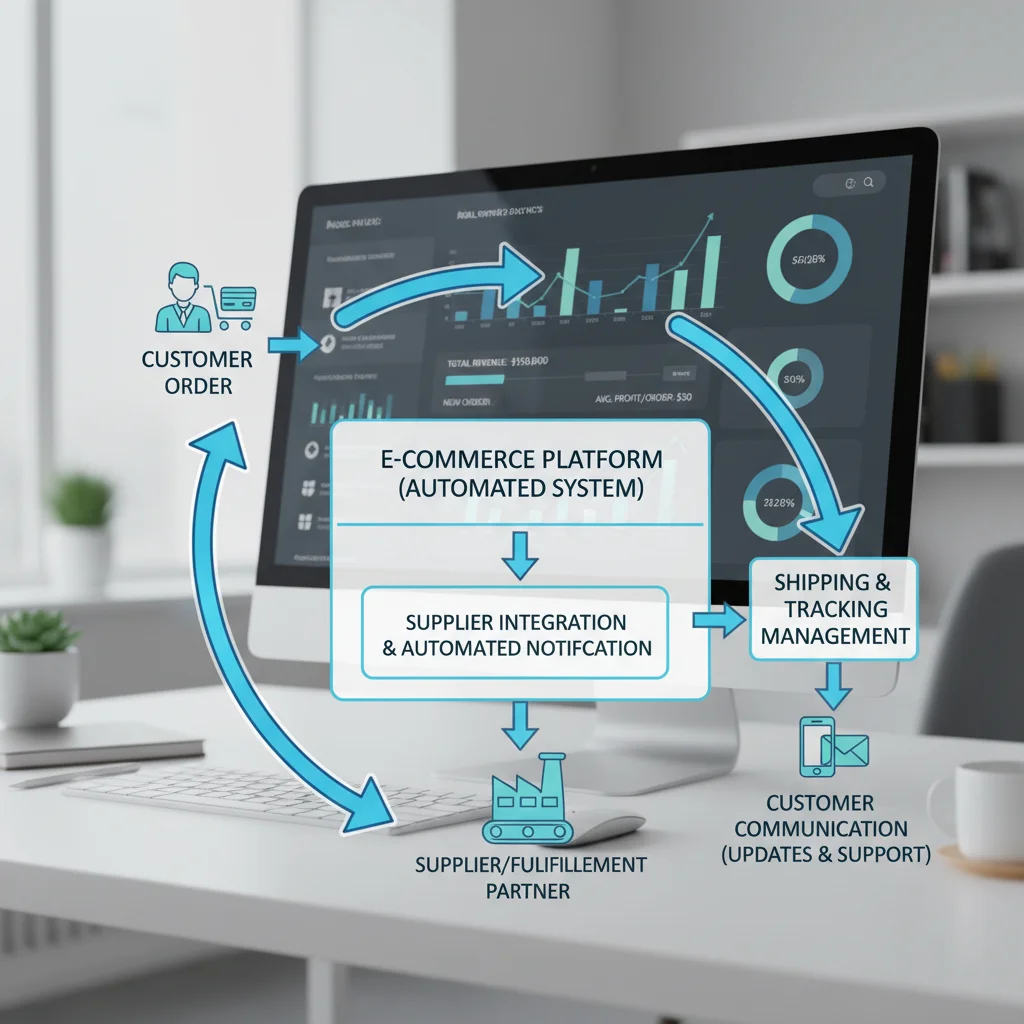
This is perhaps where efficient dropshipping automation shines brightest. Receiving a customer order, passing it to the supplier, tracking the shipment, and updating the customer can be extremely time-consuming, especially as sales grow. Automation tools can do all of this for you, from order confirmation to shipping notification.
- Automatic Order Processing: Orders are sent straight to the supplier as soon as a customer buys.
- Shipment Tracking: Automatic tracking status updates and customer notifications.
- Returns Management: Streamlined processes for returns and refunds.
3. Customer Service
Customer service is vital, but answering frequently asked questions can eat up hours. With efficient dropshipping automation, you can set up chatbots, automated FAQ systems, and canned responses to resolve most customer questions without manual intervention, freeing your team to handle more complex issues.
- Chatbots: Instant answers to common questions 24/7.
- Automated Emails: Order confirmations, shipping updates, and post-purchase follow-up emails.
- Ticketing Systems: Organizing and prioritizing support requests.
4. Marketing and Sales
Efficient dropshipping automation also extends to your marketing strategies. Abandoned cart emails, segmented email campaigns, social media posts, and even ads can be automated to maximize your sales and audience engagement.
- Email Marketing: Automated campaigns based on customer behavior.
- Abandoned Cart Recovery: Automatic emails that encourage shoppers to complete their purchase.
- Social Media Management: Post scheduling and basic engagement.
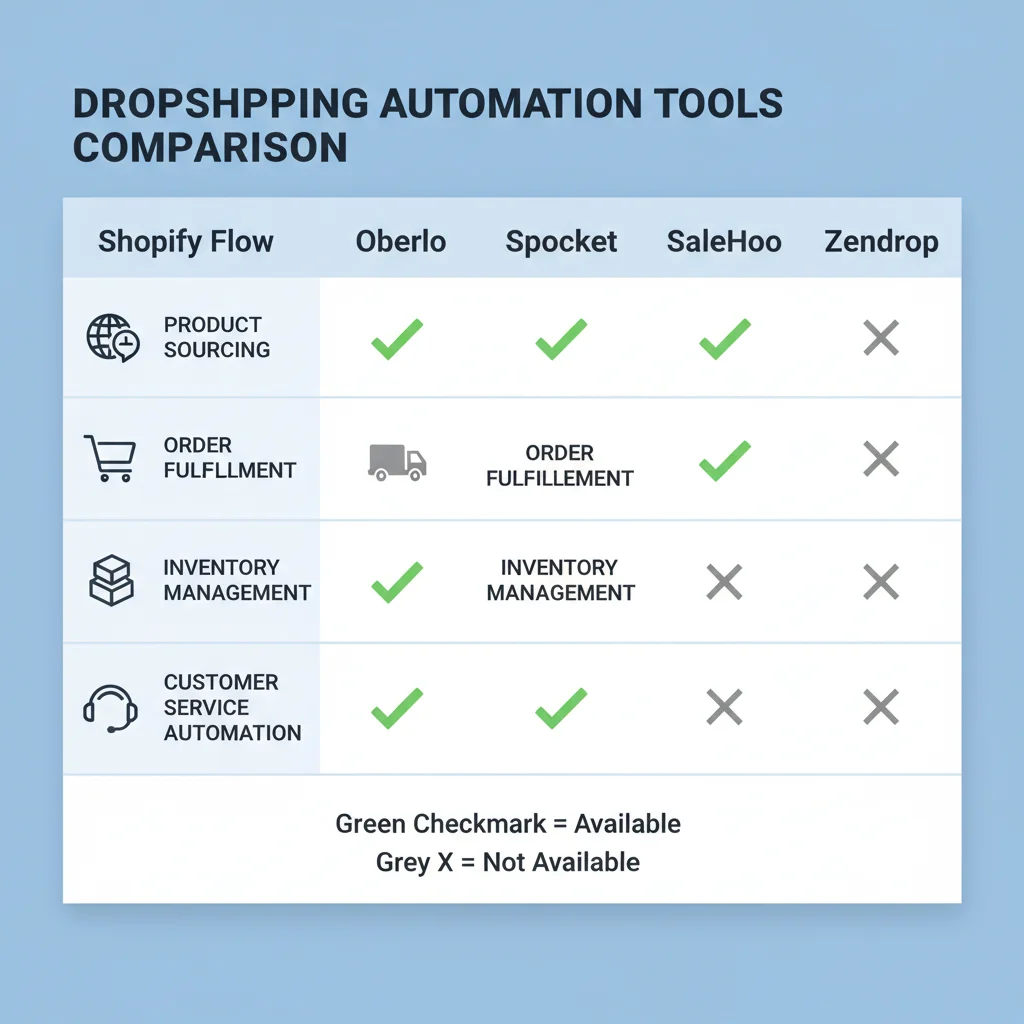
Essential Dropshipping Automation Tools for 2026
The market offers a wide range of tools to support efficient dropshipping automation. The right choice depends on your specific needs, your budget, and the e-commerce platform you use. Below are some of the most important tool categories and popular examples:
1. Integrated Dropshipping Platforms
These platforms are complete solutions that bundle multiple automation features, from product sourcing to order processing. They’re ideal for anyone looking for an “all-in-one” approach to efficient dropshipping automation.
- Oberlo (for Shopify): Historically one of the most popular tools for sourcing products from AliExpress, with order automation and inventory syncing.
- DSers (for Shopify, WooCommerce, Wix): AliExpress’s official dropshipping partner tool, offering bulk order processing and supplier optimization.
- Spocket: Focuses on US and European suppliers, with higher-quality products and shorter delivery times, plus import and order automation.
- Zendrop: Offers product sourcing, faster fulfillment, and order automation, with a focus on high-demand products.
2. Email Marketing and CRM Automation Tools
These tools are crucial for automating communication with your customers, building relationships, and driving repeat sales. Efficient dropshipping automation in marketing ensures you’re always connected with your customer base.
- Klaviyo: Specialized in e-commerce, it offers highly segmented email automation, abandoned cart flows, and personalized campaigns.
- Mailchimp: A versatile email marketing option with automation and segmentation features, ideal for beginners and growing businesses.
- ActiveCampaign: Combines email marketing, marketing automation, and CRM, enabling complex workflows and advanced personalization.
3. Chatbots and Customer Support
To provide efficient service and save time, chatbots are indispensable. They can answer common questions, provide tracking information, and even assist with sales, all automatically, making them a pillar of efficient dropshipping automation.
- Gorgias: A helpdesk platform designed for e-commerce that integrates with stores and automates responses to frequently asked questions.
- Tidio: Offers an easy-to-use chatbot with ready-made e-commerce templates, plus live chat for more complex interactions.
- ManyChat: Focused on automation for Messenger (Facebook), Instagram, and WhatsApp, ideal for engagement and sales on those platforms.
4. Accounting and Finance Tools
Although often overlooked, automating your finances is vital to your business’s health. Efficient dropshipping automation tools can sync transactions, categorize expenses, and generate reports, saving hours of manual work.
- QuickBooks Online: Comprehensive accounting software that can integrate with e-commerce platforms to automate financial records.
- Xero: Another popular cloud-based accounting solution, with automation features for bank reconciliation and reporting.
Strategies for Implementing Dropshipping Automation Successfully
Simply buying tools doesn’t guarantee efficient dropshipping automation. You need a well-defined strategy to integrate these solutions into your workflow and maximize their benefits. Here are some essential tips:
1. Start Small and Expand Gradually
Don’t try to automate everything at once. Start with the tasks that consume the most time and are the most repetitive. Product imports and order processing, for example, are good starting points. As you get comfortable with the tools and see results, you can expand to other areas, ensuring a smooth transition to efficient dropshipping automation.
2. Research and Choose the Right Tools
Take time to research different tools and read reviews. Check compatibility with your e-commerce platform and whether they offer the specific features you need. Choosing the right tools is fundamental to the success of your efficient dropshipping automation.
3. Map Your Current Processes
Before automating, fully understand your current processes. Where are the bottlenecks? Which tasks take the longest? Mapping your workflow will help you identify the best opportunities for efficient dropshipping automation and ensure you configure your tools optimally.
4. Test and Optimize Constantly
Automation isn’t a one-time setup. It’s an ongoing process of testing and optimization. Monitor your tools’ performance, gather feedback, and make adjustments as needed. What works today may not be the most efficient approach tomorrow. Efficient dropshipping automation demands adaptability.
5. Don’t Underestimate the Human Element
Even with automation, human interaction is still crucial. Use the time you save to focus on aspects of your business that need a personal touch, such as building relationships with VIP customers, solving complex problems, or creating engaging content. Efficient dropshipping automation should complement human intelligence, not replace it.
Challenges and Considerations in Dropshipping Automation
Although efficient dropshipping automation offers many benefits, it’s important to be aware of the challenges and considerations involved to ensure a successful rollout.
1. Tool Costs
Many automation tools come with costs, ranging from monthly subscriptions to per-transaction fees. It’s crucial to calculate the ROI (Return on Investment) and make sure the time savings and efficiency gains justify the investment. For efficient dropshipping automation, cost-effectiveness is essential.
2. Learning Curve
Learning to use new tools and integrating them into your workflow can take time. Be prepared for an initial learning curve and consider the training needed for you and your team. Patience is a virtue when implementing efficient dropshipping automation.
3. Technology Dependence
When you automate, you become more dependent on technology. Tool outages or integration problems can affect your business. Have contingency plans and monitor your systems regularly to avoid surprises. Resilience is key to efficient dropshipping automation.
4. Maintaining Personalization
The risk of losing the personal touch is real when you over-automate. It’s important to strike a balance and ensure that, even with automation, the customer experience remains positive and personal. Efficient dropshipping automation should enhance, not dehumanize.
5. Data Security
When you use multiple tools and integrate systems, data security becomes a bigger concern. Make sure the tools you choose have robust security policies and comply with data protection regulations. Protecting your customers’ information is a pillar of efficient dropshipping automation.
The Future of Dropshipping Automation: Trends for 2026 and Beyond
The efficient dropshipping automation landscape is constantly evolving, driven by technological advances. In 2026, we can expect even more sophisticated trends that promise to further transform how dropshipping businesses operate.
1. Artificial Intelligence and Machine Learning
AI and Machine Learning (ML) will play an increasingly prominent role in efficient dropshipping automation. They’ll be used for more accurate demand forecasting, advanced personalization of the customer experience, real-time price optimization, and identifying winning products through complex data analysis. Chatbots will become smarter, able to solve more complex problems and offer personalized recommendations.
2. Hyper-Personalized Marketing Automation
Marketing automation will evolve toward hyper-personalization, where campaigns are tailored not just to a customer segment but to the individual, based on browsing history, purchases, and even emotions detected by algorithms. This will dramatically increase conversion rates and customer loyalty.
3. Predictive Logistics Automation
With the help of AI, efficient dropshipping automation will make it possible to predict logistics problems before they happen, such as delivery delays or supplier issues. This will let dropshippers take proactive steps to mitigate risks and maintain customer satisfaction.
4. Smoother Cross-Platform Integration
Integration between different platforms (e-commerce, suppliers, marketing, support) will become even smoother and more frictionless. That means less time spent on setup and more time focused on strategy, a direct benefit of efficient dropshipping automation.
5. Compliance and Regulatory Automation
As e-commerce regulations become more complex, efficient dropshipping automation tools will emerge to help dropshippers stay compliant with tax, data privacy, and consumer protection laws, reducing legal and financial risk.
Conclusion: Embracing Automation for Success in 2026
Efficient dropshipping automation is no longer optional; it’s an essential strategy for any entrepreneur who wants to thrive in the competitive e-commerce market in 2026 and beyond. By automating repetitive, time-consuming tasks, you not only save valuable time (an estimated 5 hours a week that can be redirected to strategic growth) but also reduce errors, improve operational efficiency, and elevate the customer experience.
Starting your efficient dropshipping automation journey may seem challenging, but with the right approach (starting small, researching the right tools, mapping your processes, and continuously testing and optimizing), you’ll be well on your way to building a more robust, profitable, and sustainable dropshipping business. Future trends, driven by artificial intelligence and machine learning, promise to make automation even more powerful, offering unprecedented opportunities for innovation and growth.
Entrepreneurs who embrace efficient dropshipping automation today will be ahead of the competition tomorrow, turning a promising business model into a truly optimized, future-ready e-commerce empire. Don’t miss the chance to unlock your potential and devote your time to the strategies that will really make your business take off. The future of dropshipping is automated, and it starts now.