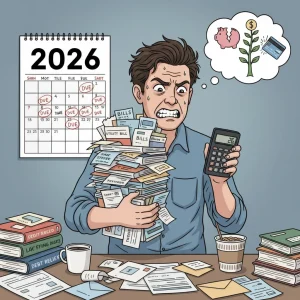
Financial Education for Americans: Get Out of Debt Now

Anúncios
Financial education for Americans: how to get out of debt and organize your money. Identify your income and debts, negotiate interest, build a realistic budget, create an emergency fund, and use a payoff method to clear your debts with discipline.
Financial education for Americans can seem overwhelming, but simple steps help you get out of debt and breathe easier. Want to see where to start?
Anúncios
Assessing your situation: income, debts, and priorities
Financial education for Americans starts with understanding your reality: how much comes in, how much goes out, and what really matters. A clear picture helps you decide your next steps without surprises.
Mapping your income, debts and priorities prevents impulsive decisions and shows where to cut costs and where to negotiate.
Anúncios
How to list your income in a practical way
Write down every source: salary, side gigs, passive income, and benefits. Use net amounts to get a real sense of the money available.
Identifying and categorizing debts
Record each debt with its balance, interest rate, and due date. This reveals which debts take up the most resources and need priority.
- Write down the creditor’s name and the current balance.
- Note the interest rate and the due date.
- Calculate the monthly payment and its impact on your budget.
- Identify debts that offer a discount for paying in full.
From this data, you can see your spending patterns and where your budget is tightest. This makes it easier to decide whether to renegotiate or prioritize payments.
Analyze fixed and variable expenses separately. Fixed expenses don’t change from month to month; variable ones can be reduced with simple choices.
Setting financial priorities
Prioritize essential costs and high-interest payments. Create a short list of up to three immediate goals: for example, paying off the highest-interest debt, keeping up with rent, and building a small emergency fund.
- Goal 1: pay off the highest-interest debt.
- Goal 2: keep essential expenses current.
- Goal 3: start an emergency fund, even a small one.
Small wins change the pace: paying off one debt or cutting one expense builds confidence to stick to the plan. Review your financial map monthly and adjust priorities as your situation changes.
With your data organized, negotiating becomes easier and your financial decisions become more rational. Keeping simple, up-to-date records is the foundation for regaining control.
Negotiating with creditors: lower interest and better terms
Negotiating with creditors is a practical step to reduce interest and extend terms without squeezing your budget too much. With preparation, you increase the chance of an agreement that works for both sides.
Gather statements and contracts and write down the exact amounts. Knowing the numbers gives you confidence during the conversation.
Essential documents and calculations
Have the updated balance, contracted interest rates, and due dates on hand. Use a simple spreadsheet or notebook to see the impact of each option.
- Total balance and current payment amount.
- Rate of interest and the last update date.
- Discount offers for paying in full.
- Proof of income to show your ability to pay.
With this data, you know how much you can offer and which proposal is viable. This keeps you from promising more than your budget can handle.
Practical proposal strategies
Start by offering alternatives: a reduction in interest, an extension of terms , or a discount for paying in full. Always propose an amount you can actually pay.
If the creditor refuses, ask for a counteroffer and get everything in writing. Don’t finalize a verbal agreement without written confirmation.
- Proposal A: reduce interest and keep the current term.
- Proposal B: extend the term with smaller payments.
- Proposal C: a discount for paying in full.
Phone negotiations work, but email or written messages give you proof. Keep reference numbers, phone numbers, and emails exchanged.
In some cases, moving the debt to another lender (a balance transfer or refinancing) or taking out credit with lower interest can be beneficial. Always compare the total cost before accepting.
How to lead the conversation
Be direct and polite. Explain your situation and show the numbers. Creditors often offer alternatives when they see effort and clarity.
Avoid threats; focus on solutions. Ask about extra fees, grace periods, and the possibility of a future review.
Record payment deadlines and communication methods. If possible, ask for the interest reduction in writing and confirm the final amounts.
Small, well-handled negotiations free up cash for emergencies and reduce stress. Update your spreadsheet after each change and review the plan monthly.
With preparation and realistic proposals, negotiating with creditors can cut interest, extend terms, and make your budget more sustainable.
A realistic budget and an emergency fund

Financial education for Americans comes down to a realistic budget and an emergency fund that protects you against the unexpected. With simple steps, you can start today.
Organizing your finances doesn’t have to be complicated; small monthly actions already make a difference.
How to build a realistic budget
List all your income after taxes and separate fixed expenses first. This shows how much is left for debt and goals.
- Write down your salary, side gigs, and other net income.
- Record fixed expenses: rent, bills, transportation.
- Estimate variable expenses and limit nonessential spending.
- Set an amount for monthly savings, even a small one.
Use a simple spreadsheet or a free app to keep track. Update it weekly and adjust when you see where the money is going.
Small changes, like cutting subscriptions or eating out less, free up money that can go toward your emergency fund or toward reducing interest.
Emergency fund strategies
Start with an achievable initial goal: for example, $100 or one month of essential expenses. Then build up to 3 to 6 months of essential costs.
- Prioritize liquidity: a savings account or low-volatility investments.
- Automate monthly transfers so you don’t spend it on impulse.
- Larger reserves for people with unstable income; smaller goals to get started.
If you have high-interest debt, strike a balance: put part toward paying off debt and part toward the fund. That way you reduce risk and interest at the same time.
Keep the fund separate from your checking account to reduce temptation. Revisit the amount with every life change: a new home, a birth, or a loss of income requires an adjustment.
With a realistic budget and an emergency fund, it is easier to avoid new debt and make decisions calmly. Start with small, consistent steps to see real progress.
Payoff methods: snowball vs. avalanche
Financial education for Americans includes choosing a payoff method that works for your situation. Understanding the differences between the snowball and avalanche methods helps you pay off your debts more effectively.
Each technique has an advantage: one brings quick motivation, the other reduces interest costs. Here’s how to apply them without complications.
How the snowball method works
With the snowball method, you pay off the smallest debts first and, once one is paid off, use that amount to accelerate the next one. This creates a cascading effect.
- Advantage: quick results and motivation.
- Recommended for people who need psychological wins.
- It may cost more if larger debts have high interest.
This method is simple and easy to track, ideal when someone loses focus with long plans.
How the avalanche method works
With the avalanchemethod, you prioritize paying off the debts with the highest interestrates first. That way, the total cost drops faster.
- Advantage: lower interest costs over the long term.
- It requires discipline, since visible results take longer.
- Recommended for people who can stay financially focused.
This method requires a bit more calculation, but it is usually the most economical way to reduce the amount owed.
Choosing between the two depends on your profile: if you need immediate motivation, the snowball method helps; if you want to save money, the avalanche method is better. Sometimes combining parts of each method works well.
Practical steps to apply today
Start by listing all your debts with balance, interest, and payments. This lets you simulate both scenarios.
- Calculate the total cost under each method to compare.
- Set a fixed monthly amount for paying down debt.
- Use extra earnings or income to speed up the strategy you chose.
Once you choose, keep a simple record and review it monthly. Small wins, like paying off a debt or lowering interest, keep you motivated.
If you have doubts, run simulations in a spreadsheet: compare how much more or less you will pay under each method in the end. This makes the decision clearer and more rational.
Both methods help you regain financial control; what matters is getting started and staying disciplined. Adjust the strategy as your income and goals change.
Rebuilding credit and changing financial habits
Financial education for Americans includes learning to rebuild your credit and change the habits that caused problems. Rebuilding credit is a practical, day-to-day process.
With simple steps, you can clean up your credit report, improve your score, and avoid cycles of debt.
Know where you stand
Check your credit reports from the major credit bureaus (Equifax, Experian, and TransUnion) to see outstanding issues and your score. Note which entries are affecting your credit.
- Check open debts and the dates they were reported.
- Identify negative marks such as collections or late card payments.
- Calculate the total amount needed to clear your record.
Negotiate and ask for proof
Negotiate payments, installment plans, or discounts, and insist on written confirmation. After paying, ask for the negative entry to be updated or removed.
Keeping records of everything prevents future problems and speeds up the recovery of your credit score.
Habits that change your credit
Pay bills on time and avoid installment plans that take up more than 30% of your income. Automating payments reduces missed due dates.
Keep few revolving accounts open and manage your card limits. High limits without control can hurt your history.
- Use autopay for essential bills.
- Reduce the number of active cards and close unnecessary ones.
- Avoid using your overdraft; prefer lower-interest alternatives.
Build an emergency reserve and don’t use credit to cover routine expenses. This protects your credit and prevents new negative marks.
Monitor and adjust
Check your credit report regularly and correct any errors. Disputing incorrect entries helps you regain access to cheaper credit.
If your job or income changes, adjust spending and prioritize critical payments. Small monthly reviews keep the plan realistic.
With disciplined negotiation and changes to your routine, you can rebuild your credit and develop healthy long-term financial habits.
In short, Financial education for Americans means organizing your income, negotiating debt, keeping a realistic budget, and building an emergency fund. With simple steps and consistency, you reduce interest, improve your credit, and take back control of your finances.
FAQ – Frequently Asked Questions About Financial Education for Americans
How do I start getting out of debt?
Start by mapping all your debts, income, and expenses. Prioritize payments, negotiate interest and terms, and choose a payoff method you can stick to.
What is the difference between snowball and avalanche?
Snowball prioritizes smaller debts to build motivation; avalanche prioritizes higher-interest debts so you pay less in total.
How do I build an emergency fund with little money?
Set a small initial goal (e.g., $100), automate monthly transfers, and use a liquid account or investment. Gradually increase it to 3 months of essential expenses.
What should I do to rebuild my credit after negotiating debt?
Pay or make installments according to the agreement, insist on written proof of payoff, and request that the negative entry be updated or removed. Monitor your score and dispute any errors on your credit reports.