Dropshipping in the U.S. With a Focus on High-Demand Niches?

Anúncios
Dropshipping in the U.S. with a focus on high-demand niches means identifying products with strong demand, validating the offer through quick tests, choosing reliable suppliers, and optimizing logistics and targeted campaigns to protect your margin and ensure efficient delivery.
Dropshipping in the U.S. with a focus on high-demand niches can sound like an easy promise, but will it work for you? Here we look at practical examples, common mistakes, and tactics that genuinely help you sell more in the domestic market.
Anúncios
How to identify high-demand niches in the U.S.
Dropshipping in the U.S. with a focus on high-demand niches requires looking at data and clear signals before betting on a product. Learn how to spot opportunities without spending much.
With practical steps and simple tools, you can validate ideas, measure interest, and avoid common mistakes.
Anúncios
Research trends and data
Use accessible sources to see what is growing in popularity.
- Google Trends: compare terms and spot seasonal peaks.
- Marketplaces (Amazon, eBay): look at best-selling products and reviews.
- Social media and hashtags: identify content with high engagement.
- Reports and niche groups: look for industry reports and active communities.
By cross-referencing these sources, you get a realistic picture of interest. Favor consistent signals across several platforms over isolated spikes.
Analyze search volumes and related keywords to understand purchase intent. Small signals, like lots of searches with little supply, can point to promising high-demand niches .
Validate with ads and test pages
Test quickly before scaling: create a simple page and advertise on a small budget.
- A clear landing page with an offer and a call to action.
- Ads targeted by interest and location.
- Key metrics: CTR, cost per click, and conversion rate.
- Adjust creatives and audiences in short test cycles.
The results of these tests show whether there is real purchase intent. Even a low conversion rate can be worthwhile if the volume is large and the cost per acquisition fits within your margin.
Also consider validating through pre-sales or a waitlist to measure commitment without needing inventory.
Evaluate competition and margin: products with high demand but heavy competition require differentiation through price, shipping, or extra benefits. Look for suppliers whose delivery times and quality match your audience’s expectations.
Pay attention to logistics and taxes; long delivery times reduce conversion, while unexpected costs eat into your margin.
In short, combine trend data, quick tests, and competitive analysis to choose niches with a real chance of success. Practical validation reduces risk and guides investment decisions.
Evaluating and selecting reliable suppliers
Dropshipping in the U.S. with a focus on high-demand niches depends on partners who deliver consistent quality and lead times. Evaluating suppliers before you sell prevents headaches.
Here are practical criteria, tests, and signs that show whether a supplier is reliable.
Essential evaluation criteria
Prioritize the factors that affect the customer experience and your margin.
- Product quality: order samples and check the finish and packaging.
- Shipping time: confirm real delivery times to your customers and seasonal variations.
- Communication: fast responses and clear information reduce errors.
- Return policy: clear terms prevent unexpected costs.
A thorough evaluation cross-checks data: reviews from other store owners, real product photos, and shipping tests. Don’t rely solely on sales descriptions. Prefer suppliers that accept small orders at first.
Compare price and margin; the cheapest option doesn’t always pay off when there are many refunds or defects. Think about total cost, including shipping and any duties or taxes.
How to test suppliers without risk
A simple, low-cost methodology helps validate partners before scaling.
- Order samples and analyze delivery time, quality, and packaging.
- Place a pilot order with a few SKUs to test logistics.
- Use payment methods with buyer protection and keep a record of all communications.
- Negotiate a basic written agreement on delivery times and terms.
Track metrics such as defect rate, average delivery time, and percentage of complete orders. These numbers show whether the supplier maintains the promised consistency.
Always have a backup supplier for the same niche. This reduces risk when there are stockouts, strikes, or policy changes at your main partner.
In short, evaluate suppliers on quality, lead time, communication, and return policy. Test with small orders, monitor metrics, and keep alternatives to protect your operation. These practices increase your chances of success with Dropshipping in the U.S. with a focus on high-demand niches.
Logistics, delivery times, and taxes in the domestic market
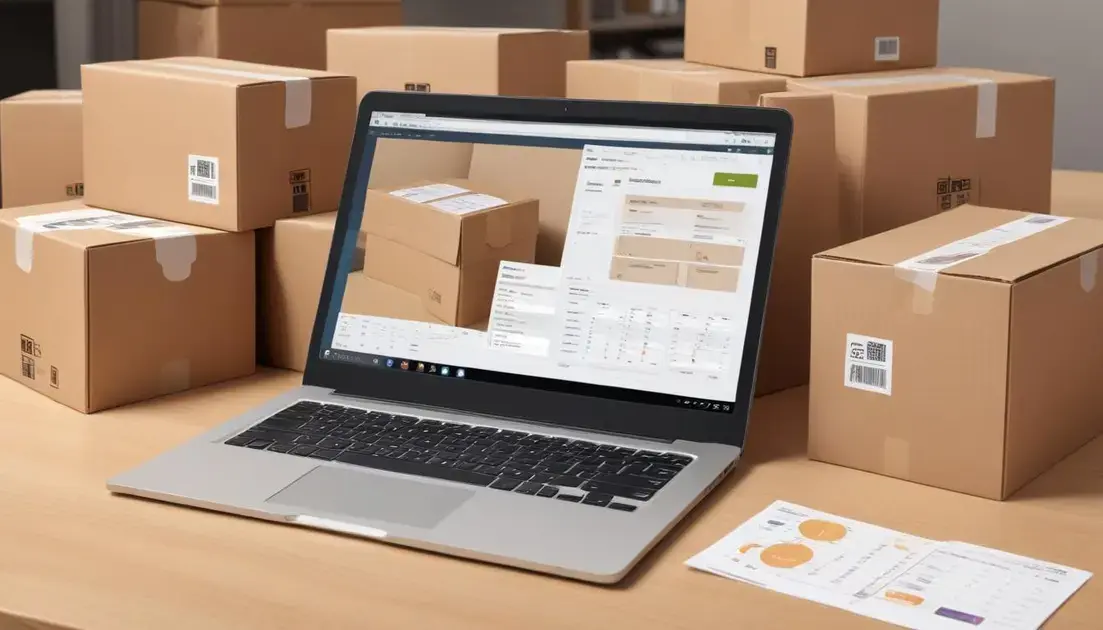
Dropshipping in the U.S. with a focus on high-demand niches requires logistics planning and attention to delivery times to keep customers satisfied. Knowing how taxes and shipping affect pricing prevents surprises.
Below are simple practices that help reduce delays, control costs, and protect your margin.
Delivery times and customer experience
Transparency about delivery time is essential. Show realistic timelines on the product page and in emails.
- Calculate delivery time by adding processing, dispatch, and final delivery.
- Offer tracking at every stage.
- Provide options: economy and express shipping when possible.
- Communicate delays before the customer contacts support.
Customers accept longer delivery times if there is clear communication and reliable tracking. Unpredictable timelines erode conversion and reputation.
Taxes and points to watch
Taxes may apply on import and on the final sale. Consider all costs when pricing: duties, customs clearance fees, and international shipping.
Tax obligations vary with the size and structure of the business. Issuing proper invoices and keeping clear records prevents fines and delivery problems.
Use tools or an accountant to simulate the tax impact before launching a product. That way you know whether the margin is real.
Practical logistics solutions
There are alternatives to reduce delivery times and costs. Each choice affects price, speed, and risk.
- Local warehousing (fulfillment) for fast domestic shipping.
- Freight consolidation to reduce cost per unit.
- Express shipping for high-converting products.
- Suppliers with tracked and insured shipping options.
Combine local inventory for best-sellers with direct shipping for test products. This balances tied-up capital and delivery speed.
Negotiate with carriers and partners for better rates and predictable delivery times. Good integration between your store and logistics reduces manual errors.
Measurement and operational control
Monitor metrics that affect sales and costs.
- Average delivery time and its variation by region.
- Rate of orders hit with duties and the associated costs.
- Return percentage and common reasons.
- Average shipping cost per order.
Clear data helps you adjust shipping policies and choose more efficient suppliers. Small gains in logistics increase profit per order.
In short, prioritize transparency on delivery times, account for all taxes when setting prices, and combine shipping strategies to balance speed and cost. These actions make Dropshipping in the U.S. with a focus on high-demand niches more viable and reliable.
Marketing strategies that drive fast conversions
Dropshipping in the U.S. with a focus on high-demand niches calls for fast strategies to turn traffic into sales. Focus on steps that produce results in weeks, not months.
Use simple, measurable tactics to test offers and shorten the time to your first sale.
Create clear, irresistible offers
Direct offers increase conversion. Highlight the benefit, the price, and an immediate incentive.
- Use a limited-time discount or free shipping.
- Show real savings with a crossed-out price and the final price.
- Include a short guarantee to reduce objections.
A well-communicated offer turns browsers into buyers. Test small variations to see what works.
Use targeted ads and tested creatives
Paid campaigns generate fast traffic when well targeted. Invest in A/B tests of creatives and audiences.
- Start with interests and lookalike audiences.
- Test short videos and images showing the product in use.
- Optimize for conversion, not just reach.
Analyze CTR and cost per acquisition within the first 48 hours. Quickly pausing underperforming ads saves budget.
Pair ads with landing pages focused on the offer. Clear, distraction-free pages increase the conversion rate.
Remarketing and urgency to win back customers
Re-engaging visitors is the fastest way to close sales. Use the pixel and email lists for remarketing.
- Show ads featuring the product viewed or left in the cart.
- Send emails with an offer and a short deadline.
- Use countdown timers to create urgency.
Small remarketing campaigns usually have better CTR and ROAS than cold campaigns. Take advantage of this to drive quick conversions.
Incorporate social proof: reviews, customer photos, and sales numbers. This reduces doubts and speeds up the purchase decision.
Automate simple flows: abandoned cart emails, a post-click sequence, and an immediate upsell. Short flows convert faster than long sequences.
Always measure CPA, ROAS, and conversion rate by ad and by product. Clear data lets you double down on what works and cut what doesn’t deliver.
In short, combine strong offers, tested ads, remarketing, and social proof to generate fast conversions. Run short tests, measure, and repeat the winning tactics.
How to scale sales and reduce operational risks
Dropshipping in the U.S. with a focus on high-demand niches requires processes that grow with you without losing quality. Below are practical actions to scale sales and reduce operational risks.
Focus on automation, metrics, and protecting your cash to grow safely.
Automate essential routines
Automation reduces errors and frees up time for strategy. Start with the basics and advance in stages.
- Order integration between store and supplier to avoid duplicate sales.
- Inventory sync to prevent selling out-of-stock products.
- Automatic customer notifications about order status.
- Billing and invoicing integrated into the system.
Simple scripts and off-the-shelf tools already handle much of the operational work. Prioritize whatever causes the most rework.
Diversify channels without losing control
Selling on multiple channels increases reach but requires clear rules. Standardize processes to stay efficient.
Use a central platform to manage ads, marketplaces, and social media. This prevents conflicting orders and makes customer service easier.
Test new channels with a limited budget and SKUs before replicating at a larger scale. Well-planned diversification helps you scale sales without raising risks too much.
Monitor KPIs and adjust quickly
The right metrics show where to cut or invest. Fast decision-making is vital when scaling.
- Conversion rate by channel and by product.
- CAC (customer acquisition cost) and LTV (customer lifetime value).
- Average delivery time and return rate.
- Percentage of orders with problems (damage, loss, delays).
Review data weekly and make adjustments in short cycles. Small improvements in conversion and logistics have a big impact on profit.
Strengthen your supplier chain and fulfillment
Having reliable partners reduces disruptions. Contracts and alternatives are crucial to mitigating risk.
Negotiate volume tests, minimum lead times, and clear clauses on exchanges and returns. Keep at least one backup supplier for your main SKUs.
Consider local fulfillment for fast-moving products. Strategic inventory brings you closer to customers and speeds up delivery.
Protect your cash and manage operational risks
Healthy cash flow lets you respond to the unexpected without stalling the operation.
- Set a minimum margin per product before scaling.
- Keep a financial reserve for unexpected costs.
- Get insurance or commercial protection when feasible.
- Document processes and train your team to reduce human error.
Planning for scenarios and having reserves keeps a logistics or supplier problem from compromising the entire operation.
In short, combine automation, KPI monitoring, controlled diversification, and supplier management to scale sales without increasing risk. Gradual execution and constant measurement make growth sustainable.
In short, Dropshipping in the U.S. with a focus on high-demand niches works when you combine market research, rigorous supplier selection, clear logistics, and tested campaigns. Validate ideas with quick tests, automate processes, and track metrics to scale safely. Small, continuous improvements reduce risk and increase profit.
FAQ – Dropshipping in the U.S. With a Focus on High-Demand Niches
How do I choose a reliable dropshipping supplier?
Order samples, test pilot orders, and evaluate delivery times, quality, and communication. Check reviews from other store owners and return policies.
Which taxes should I consider when selling in the U.S.?
Consider import duties, state sales tax, and income taxes on your sales. Keep proper invoices and records, and consult an accountant to estimate your real margin.
How can I reduce delivery times for U.S. customers?
Use local fulfillment for best-sellers, prefer suppliers with tracked shipping, and communicate realistic delivery times to customers.
How can I scale sales without increasing operational risks?
Automate orders and inventory, monitor KPIs, keep backup suppliers, and maintain a financial reserve for the unexpected.